
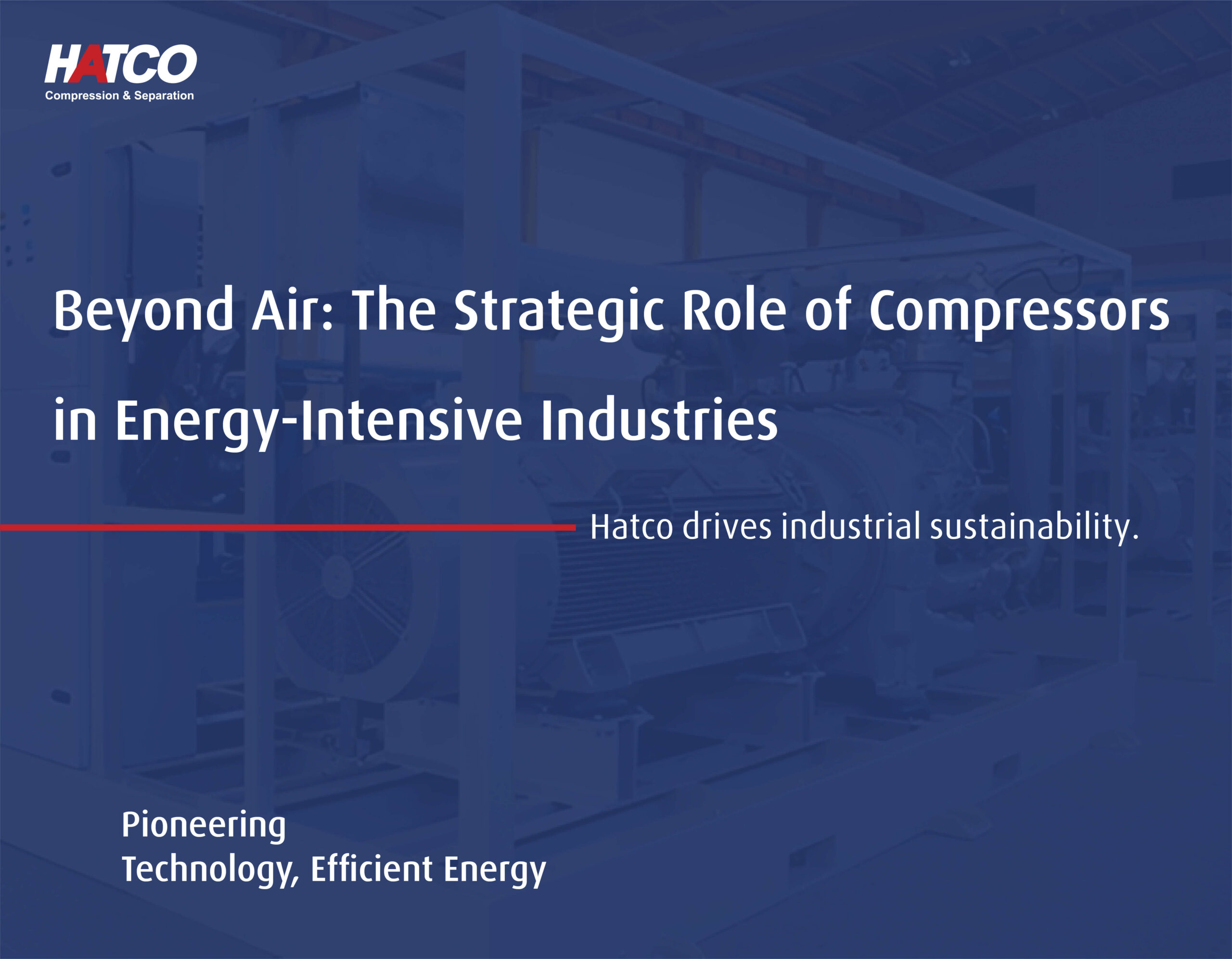
The Strategic Role of Compressors in Energy-Intensive Industries
In the complex and high-stakes world of energy-intensive industries such as oil and gas, petrochemicals, metallurgy, and heavy manufacturing, compressors play a vital role beyond merely pressurizing air. They are essential components that support critical operations, facilitate chemical processes, maintain production continuity, optimise energy usage, and ensure environmental compliance.
Over the past few decades, gas compression systems have evolved from basic mechanical components into strategic assets. These systems not only serve as the operational backbone of these industries but also align with broader corporate objectives such as cost efficiency, sustainability, digital transformation, and risk management.
This article explores how advanced gas compression systems strategically contribute to high-demand industrial sectors, emphasising the increasingly important role they play, which is often underestimated.
- The Technical Bedrock of Process Industries
Compressors operate by increasing the pressure of a gas while reducing its volume. In energy-intensive industries, they are used not only to compress air but also to handle various industrial gases, including natural gas, hydrogen, nitrogen, carbon dioxide, and certain chemical vapours. These gases play essential roles in chemical reactions, thermal processes, and material transformations. For example:
- In oil refineries, compressors are essential in catalytic cracking, hydrocracking, and gas recovery processes.
- In natural gas processing plants, they are used for gas gathering, dehydration, sweetening, and liquefaction.
- In steel manufacturing, blast furnace gas and coke oven gas are compressed for reuse, improving energy efficiency.
Without high-performance compressors, many industries would experience critical downtime or fail to meet production goals.
- Strategic Value in Operational Continuity
Downtime in energy-intensive industries can lead to losses ranging from hundreds of thousands to millions of dollars each day. Compressors play a vital role in ensuring that production processes remain stable and uninterrupted. Their significance lies in their ability to maintain consistent pressure levels, which are essential for chemical reactions and flow control within complex pipelines.
Advanced compressor systems are often equipped with predictive maintenance features. These capabilities use sensors, data analytics, and artificial intelligence to detect anomalies and prevent breakdowns. This shift from reactive to predictive maintenance enhances operational resilience and significantly reduces the risk of unplanned downtime.
Additionally, modular and scalable compressor designs allow for seamless expansion or reconfiguration of facilities. This adaptability enables industries to respond quickly to market changes or new production requirements.
- Compressors as Enablers of Energy Efficiency
Compressors are among the most energy-intensive devices used in industrial facilities, accounting for up to 30% of total electricity consumption in some operations. Consequently, their efficiency has a significant impact on the overall energy footprint of a facility. Recent advancements, such as variable speed drives (VSD), oil-free designs, multi-stage compression, and advanced cooling systems, have greatly improved compressor efficiency.
Investing in energy-efficient compression systems can strategically:
- Reduce operational costs.
- Support compliance with environmental regulations.
- Lower carbon emissions in line with sustainability goals.
Many countries offer tax incentives or carbon credits for adopting energy-efficient technologies, making the use of efficient compressors a strategic financial decision as well as a technical investment.
- Supporting Sustainability and Decarbonization Goals
The role of compressors in decarbonization efforts is increasingly significant. For example:
- In hydrogen production and storage, compressors are essential for transporting hydrogen through pipelines or compressing it for use in fuel cells.
- In carbon capture and storage (CCS), compressors help in pressurizing CO2 for transport and injection into geological formations.
- In biogas and renewable natural gas (RNG) production, compressors aid in upgrading and injecting the gas into distribution networks.
As companies set ambitious net-zero targets, compressors are crucial for meeting them. Selecting the right compressor system—with minimal leakage, effective control, and compatibility with alternative gases—directly supports corporate environmental strategies.
- The Role in Digital Transformation
Industry 4.0 technologies have been integrated into gas compression systems. Smart compressors can communicate with centralised control systems, enabling remote monitoring, automated adjustments, and real-time diagnostics. The data collected by these systems can be utilised for various purposes.
- Optimise performance dynamically based on demand.
- Benchmark compressor performance across multiple facilities.
- Inform long-term asset management and investment planning.
The combination of IoT, cloud computing, and AI is changing compressors from simple mechanical tools into dynamic parts of an intelligent industrial ecosystem. These technologies enable the creation of digital twins, advanced simulations, and flexible production planning, which are crucial components of contemporary industrial strategies.
- Risk Management and Regulatory Compliance
Compressors are essential for supporting risk mitigation strategies by enhancing system reliability, safety, and environmental performance. In industries that handle flammable or toxic gases, safety is paramount. Compressors with built-in safeguards, pressure relief systems, and explosion-proof designs help minimise the risks of leaks, explosions, and environmental contamination.
Moreover, advanced monitoring of compressors assists companies in adhering to strict local and international regulations, such as those established by the EPA, OSHA, or the EU Industrial Emissions Directive. Failure to comply with these regulations can result in significant fines, damage to reputation, or even operational shutdowns.
By integrating compliance features directly into the compressor system, industries can maintain continuous readiness for audits and reduce the administrative burden associated with manual reporting.
- Competitive Advantage Through Customisation and Innovation
Customising compressor systems for specific processes provides companies with a competitive advantage. For instance, high-pressure hydrogen compressors and oil-free air compressors are designed to meet the unique requirements of industries such as pharmaceutical manufacturing, ensuring that the equipment aligns closely with operational goals.
Furthermore, companies that collaborate with innovative compressor manufacturers can access advanced technologies ahead of their competitors. These innovations may include:
- Heat recovery systems that repurpose waste heat.
- Magnetic bearing compressors with minimal wear and high precision.
- Hybrid systems combining centrifugal and reciprocating designs for optimal performance.
The strategic alignment between compressor technology and business innovation leads to faster time-to-market, enhanced product quality, and improved customer satisfaction.
Conclusion: More Than a Machine
Compressors have evolved beyond their traditional role as simple mechanical tools. Today, they function as strategic assets that influence various factors such as plant uptime, energy efficiency, regulatory compliance, innovation, and environmental stewardship.
In energy-intensive industries, selecting the right compressor technology is no longer just an engineering choice; it has become a strategic business decision. Companies that recognise this shift and invest accordingly will enhance their operational performance and strengthen their long-term competitive position in an increasingly complex and sustainability-driven global economy.
As industries continue to evolve, the strategic role of compressors will expand further—transitioning from merely pressurising gases to driving significant industrial transformation.


User Comments