
Balance of Plant in Industrial Gas Projects: The Infrastructure Behind Reliable Gas Production
Industrial gas projects are often defined by their primary process technology: an Air Separation Unit (ASU), a PSA nitrogen generator, an oxygen generation system, a hydrogen purification unit, or another gas production and separation process. Yet the performance of the overall facility depends on far more than the core process equipment.
Behind every reliable industrial gas plant is a network of supporting systems that provides power, cooling, compressed air, water, instrumentation, drainage, utilities, control, storage, safety and other essential services. Collectively, these systems are generally referred to as the Balance of Plant (BoP).
While the process unit performs the primary gas production or separation function, the Balance of Plant creates the operating environment in which that process can function safely, continuously and efficiently.
This distinction becomes particularly important in large industrial gas projects, where a process system may involve sophisticated compressors, purification units, adsorption vessels, cryogenic equipment, heat exchangers and control systems. Without properly engineered supporting infrastructure, even highly efficient process equipment cannot achieve its intended performance.
For this reason, Balance of Plant engineering should not be considered an auxiliary activity performed around the main process package. It is an integral part of the plant architecture and, ultimately, a major contributor to availability, energy consumption, maintainability and lifecycle cost.
Linde Engineering, for example, approaches industrial plant development across the entire asset lifecycle, combining process technologies with engineering and operational capabilities, while its process-plant portfolio includes air separation and gas-processing facilities.
What Is Balance of Plant?
Balance of Plant (BoP) refers to the collection of systems, equipment, utilities, infrastructure and services required to support the primary process unit of an industrial facility.
In an industrial gas project, the primary process might be responsible for producing nitrogen, oxygen, hydrogen or another industrial gas. The Balance of Plant provides everything necessary for that process to operate as designed.
Depending on the project scope and technology, BoP systems may include:
Electrical power distribution
Instrument and plant air systems
Cooling water systems
Chilled water or refrigeration systems
Demineralized or utility water systems
Nitrogen and utility gas distribution
Feed air and gas compression auxiliaries
Gas storage and buffer systems
Vent and relief systems
Drainage and wastewater systems
Fire and gas protection systems
Heating and ventilation
Buildings and equipment shelters
Control and instrumentation infrastructure
Distributed Control System (DCS) and safety systems
Emergency power systems
Communication and monitoring systems
Piping networks and interconnecting systems
* Mechanical and electrical infrastructure
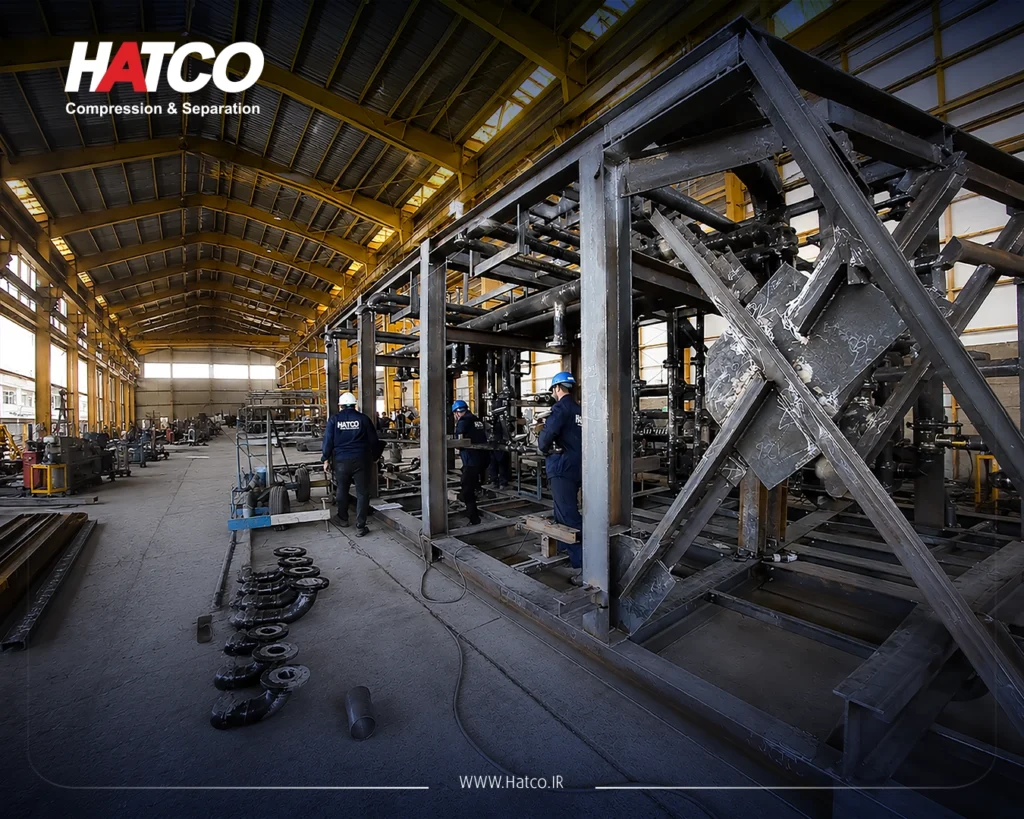
The exact definition of BoP varies from one project to another because the required supporting systems depend on process technology, capacity, operating conditions, site infrastructure and client requirements.
In a modular compressor project, for example, Siemens Energy describes compressor modules as incorporating both the compressor equipment and associated Balance of Plant components, demonstrating that BoP can be engineered as an integrated part of the process package rather than as a completely separate scope.
Why Balance of Plant Matters in Industrial Gas Projects
The most sophisticated gas-generation technology cannot operate independently.
A PSA nitrogen generation system requires a reliable compressed-air supply. That compressed air must normally meet specific requirements for pressure, flow, temperature and cleanliness before entering the separation system. The generated nitrogen may then require buffering, storage, pressure regulation and distribution before reaching the point of use.
Similarly, an Air Separation Unit depends on large-scale air compression, purification, refrigeration, electrical power and supporting utilities. Industrial gas compressors are central to applications such as main air compression, boosted air, nitrogen boosting and oxygen compression.
This means that the performance of the process unit is inherently connected to the performance of its supporting infrastructure.
A poorly designed utility system can result in:
Reduced plant availability
Unstable process conditions
Increased energy consumption
Pressure fluctuations
Difficult maintenance
Unplanned shutdowns
Reduced equipment lifetime
Higher operating expenditure
* More complex commissioning
Conversely, a properly engineered BoP system allows the process plant to operate within its design envelope with greater stability and predictability.
The objective is therefore not simply to “provide utilities.” The objective is to create a reliable operating ecosystem around the process technology.
Major Balance of Plant Systems
1. Electrical Power and Distribution
Electrical power is one of the fundamental utilities in an industrial gas facility.
Large gas projects can include compressors, pumps, cooling systems, heaters, control systems, analyzers and auxiliary equipment, all of which require carefully engineered electrical infrastructure.
The electrical BoP may include:
Main incoming power systems
Transformers
Medium- and low-voltage switchgear
Motor control centers
Variable frequency drives
Emergency power
UPS systems
Distribution panels
Grounding and lightning protection
Electrical monitoring and protection
The design challenge is not simply determining the total connected load. Engineers must also consider starting currents, motor characteristics, load variation, redundancy, harmonic distortion, power quality and critical loads.
For a gas plant, electrical reliability is directly connected to process reliability. A failure affecting a critical compressor, control system or utility pump can propagate through the process and result in a plant trip.
2. Instrument Air and Plant Air
Compressed air is one of the most important supporting utilities in industrial facilities.
Instrument air is used to operate pneumatic control valves and other instrumentation, while plant air can serve maintenance tools, cleaning operations and other general requirements.
In gas-generation applications, compressed air may also become the feedstock for the gas-generation process itself.
A typical on-site nitrogen generation system can integrate an energy-efficient compressor, dry-air treatment, a gas generator and buffer/storage equipment into a continuous supply system.This makes air quality particularly important.
Depending on the application, compressed air treatment can involve:
Aftercoolers
Moisture separators
Filters
Refrigerated or adsorption dryers
Oil removal systems
Air receivers
Pressure regulation
Condensate management
For PSA systems, moisture and contaminants can negatively affect adsorbent performance and system reliability. Therefore, the air-treatment system should be considered part of the process rather than merely a utility package.
3. Cooling Water and Heat Rejection
Industrial gas production frequently involves significant heat generation.
Compressors, pumps and other rotating equipment convert electrical energy into mechanical work, while a portion of that energy ultimately appears as heat. Effective heat rejection is therefore essential for maintaining equipment within acceptable operating conditions.
Depending on the project, cooling may be provided through:
Cooling towers
Air-cooled heat exchangers
Closed-loop cooling systems
Chilled water systems
Plate or shell-and-tube heat exchangers
Cooling-water pumps
Cooling-system design must account for ambient conditions, seasonal variation, water quality, redundancy and maintenance requirements.
In facilities operating under demanding environmental conditions, the cooling system can become a significant contributor to overall plant energy consumption, making thermal integration and equipment selection important from both operational and economic perspectives.
4. Water and Wastewater Systems
Although industrial gas plants generally do not consume water in the same way as many process industries, water remains an important utility.
Depending on the technology and site, BoP may include:
Raw water
Utility water
Demineralized water
Cooling-water makeup
Potable water
Fire water
Drainage
Oily-water collection
* Wastewater handling
Water quality is particularly important for cooling systems and equipment that are sensitive to scaling, corrosion or contamination.
A well-engineered system therefore considers not only water availability but also treatment requirements, blowdown, chemical conditioning, drainage and environmental compliance.
5. Storage, Buffering and Gas Distribution
Gas production does not necessarily occur at exactly the same rate as gas consumption.
Industrial processes may experience fluctuations in demand, while gas-generation systems often operate most efficiently within specific operating ranges. Buffer vessels and storage systems therefore provide an important interface between production and consumption.
Typical equipment can include:
Product gas receivers
Buffer vessels
High-pressure storage
Low-pressure storage
Vaporizers for cryogenic liquids
Pressure-reducing stations
Gas distribution headers
Isolation and control valves
Storage also provides operational flexibility during transient conditions, startup and maintenance.
For on-site nitrogen generation, for instance, a buffer tank and a separate storage receiver can help stabilize the supply between the generation system and the process demand.
6. Control and Instrumentation
Modern industrial gas plants rely heavily on automation.
The Balance of Plant therefore extends into the control architecture that connects process equipment, utilities and safety systems.
Typical components include:
Distributed Control Systems (DCS)
Programmable Logic Controllers (PLC)
Emergency Shutdown Systems (ESD)
Safety Instrumented Systems (SIS)
Field instrumentation
Gas analyzers
Pressure and temperature transmitters
Flow measurement
Control valves
Remote monitoring
* Alarm and event management
The purpose of automation is not simply to operate equipment automatically. A properly designed control system should provide operators with visibility into the condition of the plant and allow the facility to respond predictably to changes in load and operating conditions.
This becomes particularly important in gas-generation systems where pressure, flow and purity can be closely interconnected.
Digital monitoring can also support predictive maintenance and performance optimization. Siemens Energy, for example, identifies remote diagnostics, preventative maintenance and monitoring of auxiliary and Balance of Plant systems as components of compressor service strategies.
7. Safety Systems
Safety cannot be separated from Balance of Plant engineering.
Industrial gas facilities can contain high pressures, cryogenic fluids, oxygen-enriched environments, flammable gases and rotating machinery. The safety architecture must therefore be developed according to the specific hazards associated with the technology and site.
BoP safety systems may include:
Fire and Gas Detection
Emergency Shutdown
Pressure Relief Systems
Firewater Networks
Emergency Power
Safety Instrumented Systems
Vent and flare systems where applicable
Hazardous-area electrical systems
Emergency ventilation
Gas detection and alarm systems
The objective is to prevent abnormal conditions from escalating and to provide controlled responses when deviations occur.
Good engineering therefore treats safety as a system-level requirement rather than as a collection of individual safety devices.
Balance of Plant and Energy Efficiency
Energy efficiency in an industrial gas plant cannot be evaluated by looking only at the main process equipment.
Compression, cooling, pumping, drying and auxiliary systems can represent a significant portion of the facility’s total energy consumption.
This is especially relevant because industrial gas production is often strongly associated with compression power.
Energy-efficient BoP design can therefore involve:
Selecting compressors according to actual operating profiles
Optimizing pressure levels
Using variable-speed drives where appropriate
Minimizing pressure drops
Recovering useful heat
Optimizing cooling systems
Avoiding excessive utility capacity
Improving control strategies
* Matching equipment capacity with actual demand
An important principle is that energy efficiency should be designed into the system architecture rather than added after commissioning.
Reliability, Redundancy and Availability
Industrial gas plants frequently supply gases that are essential to continuous production.
For a refinery, petrochemical complex, steel plant or chemical facility, interruption of nitrogen, oxygen, hydrogen or instrument air can affect downstream operations.
BoP design therefore needs to consider reliability at the system level.
Depending on the criticality of the application, designers may use:
Duty/standby equipment
Parallel compressors
Redundant pumps
Multiple electrical feeders
Backup power
Dual instrument-air trains
Redundant control systems
Strategic gas storage
* Bypass arrangements
However, redundancy does not automatically mean better design.
Installing unnecessary duplicate equipment increases CAPEX, maintenance requirements and physical footprint. The appropriate level of redundancy should instead be determined through reliability analysis, process criticality and client requirements.
The goal is to achieve the required level of availability without creating unnecessary complexity.
BoP Engineering Across the Project Lifecycle
Balance of Plant should be considered from the earliest stages of an industrial gas project.
During conceptual design, engineers establish utility requirements, plot-plan constraints and major interfaces.
During basic engineering, utility balances, equipment sizing, process interfaces and preliminary layouts are developed.
During detailed engineering, the focus moves toward equipment specifications, piping, electrical systems, instrumentation, civil works and integration.
During procurement and manufacturing, equipment quality and interface management become critical.
During construction and installation, the challenge is to ensure that the physical systems match the engineered design.
Finally, during commissioning, the BoP systems must be progressively tested and integrated with the main process.
This lifecycle perspective is consistent with the approach of leading industrial plant engineering companies, where engineering, technology and operational capabilities are considered across the full asset lifecycle.
Common Challenges in Balance of Plant Design
One of the most common challenges is interface management.
An industrial gas project may involve process engineers, mechanical engineers, electrical engineers, instrumentation specialists, civil teams, equipment manufacturers and the client. Each discipline has its own requirements, but the plant ultimately has to function as one integrated system.
Poor interface management can lead to:
Incorrect utility capacities
Equipment compatibility problems
Piping clashes
Inadequate maintenance access
Control-system integration issues
Commissioning delays
* Unclear battery limits
Another challenge is designing for actual operating conditions rather than theoretical maximum demand.
Oversizing every utility can increase capital cost and energy consumption, while undersizing can compromise reliability. Effective BoP engineering therefore requires a balance between current requirements, future expansion, turndown conditions and realistic operating scenarios.
From Equipment Supply to Integrated Plant Engineering
The evolution of industrial gas projects has increasingly shifted the focus from individual equipment packages toward integrated solutions.
A compressor, PSA unit, ASU or gas purification package does not operate in isolation. Its value is realized only when it is properly integrated with the surrounding utilities, controls, piping, electrical systems and infrastructure.
This is why modern industrial gas engineering increasingly emphasizes:
Process + Utilities + Controls + Safety + Integration + Lifecycle Performance
rather than equipment selection alone.
The Balance of Plant is the layer that connects these elements.
It transforms individual equipment packages into an operating facility.
HATCO: Engineering the Balance of Plant Around Industrial Gas Solutions
At HATCO, Balance of Plant can be approached as an integrated engineering scope rather than a collection of auxiliary systems.
As an engineering and manufacturing company active in compressors, industrial gas production and gas-processing solutions, HATCO’s project capabilities extend across the disciplines required to connect core process technologies with their supporting infrastructure.
For industrial gas projects, this approach can encompass engineering and integration of systems associated with Air Separation Units, PSA gas-generation systems, hydrogen purification, compressor packages, cryogenic storage, vaporizers, instrument-air systems and other plant utilities.
The value of such an approach becomes particularly clear in complex projects where the process package represents only one part of the overall plant.
HATCO’s engineering scope covers areas including process, mechanical, piping, civil, electrical and instrumentation engineering, together with procurement, manufacturing, testing, installation and commissioning. This multidisciplinary structure enables the interfaces between process equipment and Balance of Plant systems to be addressed as part of a unified project architecture rather than as isolated engineering packages.
From the initial definition of utility requirements to equipment integration, piping, electrical distribution, control systems and commissioning, the objective is to develop a plant in which every supporting system contributes to the reliability and performance of the main process.
In an industrial gas project, the question is therefore not simply whether the gas-generation technology can produce the required gas.
The more important question is whether the entire plant can produce, condition, store and deliver that gas reliably under real operating conditions.
That is where Balance of Plant engineering becomes decisive.
For HATCO, the Balance of Plant is not simply the equipment around the process.
It is the engineering framework that allows the process to perform.
Conclusion
Balance of Plant is one of the most critical yet frequently underestimated elements of an industrial gas project.
The main process technology may determine how nitrogen, oxygen, hydrogen or another industrial gas is produced, but the supporting infrastructure determines whether that technology can operate reliably, efficiently and safely over the long term.
Electrical systems provide the energy. Compressed-air systems support instrumentation and, in some technologies, the separation process itself. Cooling systems remove heat. Storage systems stabilize supply. Control systems coordinate operation. Safety systems protect people and equipment. Piping and utilities connect everything into a functioning plant.
When these systems are engineered as an integrated whole, the result is more than a collection of equipment packages.
It becomes a reliable industrial asset.
For modern industrial gas projects, therefore, Balance of Plant should be considered from the beginning of the engineering process, with the same level of attention given to process performance, energy efficiency, reliability, maintainability and lifecycle cost.
Because ultimately, the performance of an industrial gas plant is determined not only by the technology inside the process unit, but by everything that allows that technology to operate.

User Comments