
Pressure by Design: Engineering High-Performance Industrial Gas Compression Systems
Pressure by Design:
Engineering High-Performance Industrial Gas Compression Systems
Introduction: Why Compression Matters
Pressure is everywhere in modern industry.
It moves natural gas through pipelines, supports chemical processes, enables hydrogen purification, helps recover valuable gases, and allows industrial facilities to control and transport gases efficiently. Behind many of these operations is a piece of equipment that rarely receives attention until something goes wrong: the compressor.
An industrial compressor does much more than simply “increase pressure.” It is part of a larger system designed to deliver gas at the right pressure, flow rate, temperature, and quality while maintaining reliable and efficient operation.
This is especially important in industries such as oil and gas, petrochemicals, steel, mining, LNG, hydrogen, and industrial gas production. In these environments, even a relatively small improvement in compressor performance can have a meaningful effect on energy consumption, operating costs, and plant reliability.
So, what does it take to engineer a high-performance industrial gas compression system?
The answer begins with understanding that compression is not about pressure alone. It is about designing the entire system around pressure.
What Is an Industrial Gas Compression System?
At its most basic level, a compressor takes gas at a lower pressure and delivers it at a higher pressure.
But an industrial compression system usually includes much more than the compressor itself.
Depending on the application, a compressor package may include the compressor core unit, driver, cooling system, lubrication unit and sealing systems, filters and separators, valves, piping, instrumentation, control systems, and machinery protection. All of these components have to work smoothly together.
Imagine a compressor that has been selected to provide the required discharge pressure, but the suction piping creates excessive pressure loss. Or a compressor that performs efficiently at full capacity but becomes unstable when production demand falls.
The machine itself may meet its specification, yet the overall system may still perform poorly.
That is why modern compressor engineering focuses on the complete operating system entirely, rather than treating the compressor as an isolated machine.
The First Question: What Does the Process Need?
Before selecting a compressor, engineers need to understand the process.
What gas is being compressed? How much gas needs to be handled? What pressure does it enter at? What pressure is required at the outlet? How much can these conditions change during normal operation?
These questions may sound straightforward, but they determine almost every major decision that follows.
Gas composition is particularly important. Nitrogen, hydrogen, natural gas, carbon dioxide, oxygen, and hydrocarbon-rich gases do not behave in exactly the same way during compression.
Their density, molecular weight, temperature response, energy requirements, and compatibility with materials and sealing systems can differ considerably.
The operating range is equally important.
Industrial plants rarely operate at specific one constant production rate. Demand can increase or decrease, equipment can start or stop, and process conditions can change in many times.
A well-designed compression system therefore needs to perform not only at its ideal and individual operating point, but across the conditions the plant is realistically expected to experience.
Why Higher Pressure Means More Than Higher Numbers
Increasing gas pressure requires energy.
As gas is compressed, its temperature generally rises. The higher the pressure increase, the more carefully engineers need to consider temperature, energy consumption, cooling, materials, and equipment limitations.
This is one reason why industrial compression is fundamentally an engineering challenge rather than simply a mechanical one. For some applications, compressing the gas in one step may be appropriate.
For higher-pressure duties, the process can be divided into several stages. Gas is compressed, cooled, compressed again, and cooled again if necessary.
This approach, known as multistage compression, can improve efficiency and help control temperature.
However, adding more stages also means adding more equipment and complexity along with more stability requirements.
The best solution is therefore not necessarily the one with the most stages. It is the configuration that provides the required performance with an appropriate balance between efficiency, reliability, complexity, and cost.
Choosing the Right Compressor
Different applications require different compressor technologies. Dynamic Compression and Positive Displacement Compression. The three major categories commonly encountered in industrial gas compression are centrifugal (dynamic), reciprocating and rotary screw compressors (positive displacement).
Centrifugal Compressors
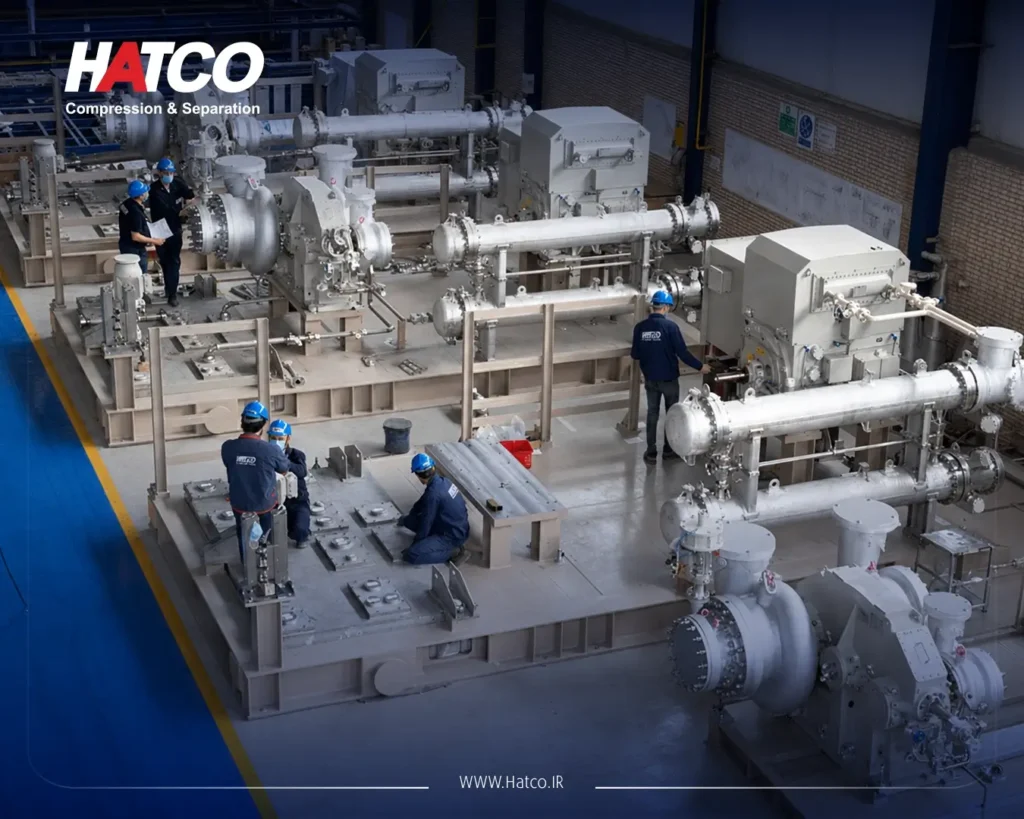
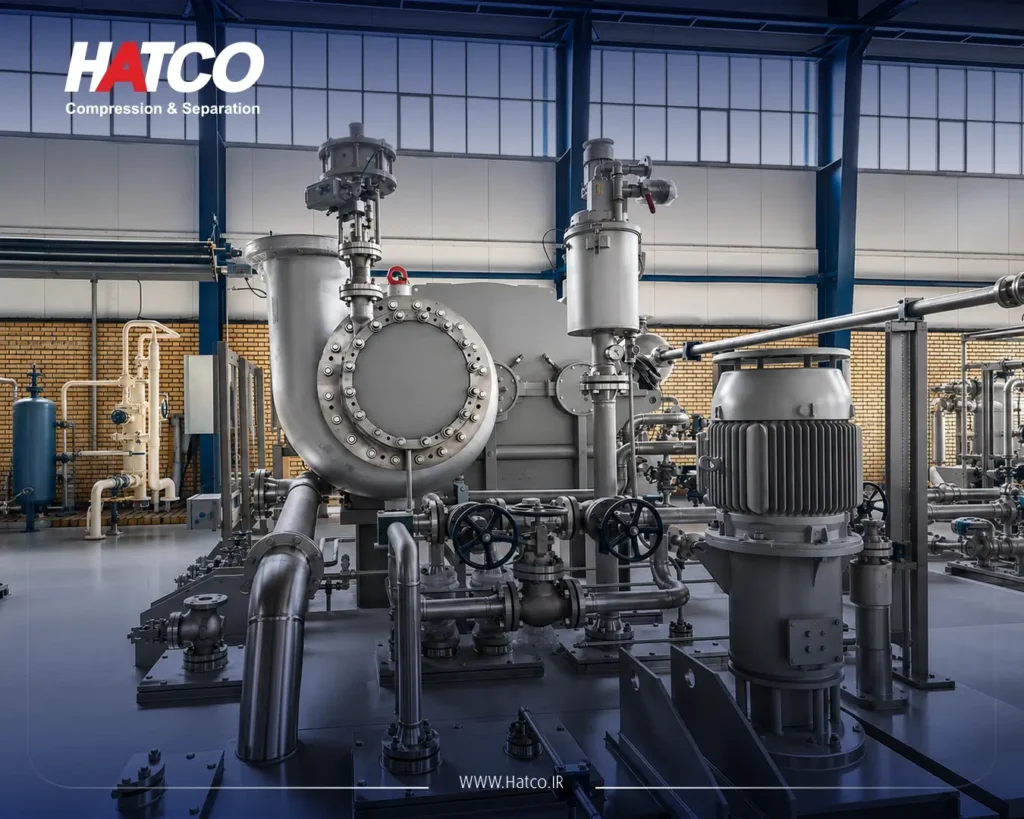
Centrifugal compressors are widely used when large volumes of gas need to be handled continuously.
Instead of using pistons, they transfer energy to the gas through rapidly rotating components. Their ability to handle high flow rates makes them suitable for many large-scale process applications.
However, centrifugal compressors need to operate within a suitable and almost freeze range.
If gas flow becomes too low, the compressor can approach an unstable condition known as surge. If flow becomes excessively high, the machine can move toward another performance limit.
This means that compressor selection and control have to be considered together.
API 617 is one of the key industry codes and standards covering axial and centrifugal compressors used in petroleum, chemical, and gas-industry services.
Reciprocating Compressors
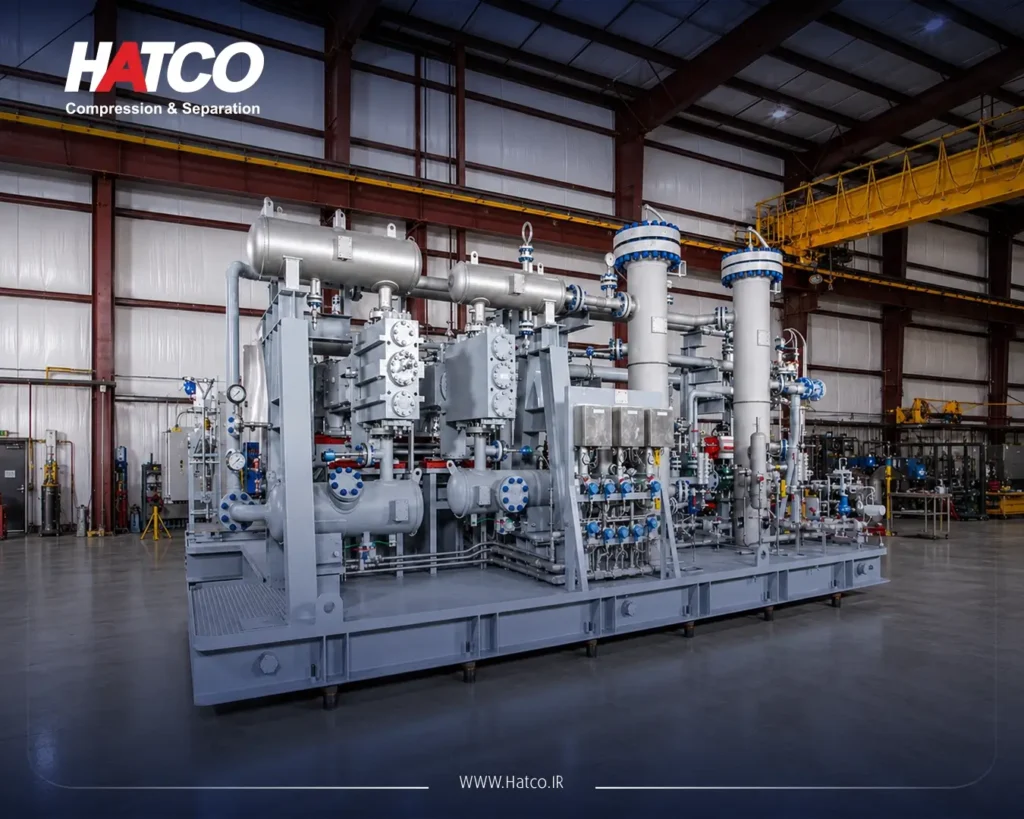
Reciprocating compressors work more like a piston engine.
Gas enters a cylinder, the piston compresses it, and the compressed gas is discharged. This technology can achieve high pressures and is often used where pressure requirements are demanding and flow rates are comparatively moderate.
Because the piston moves back and forth, vibration and pressure pulsation require careful consideration.
API 618 code and standard provide requirements for reciprocating compressors used in petroleum, chemical, and gas-industry applications.
Rotary Screw Compressors
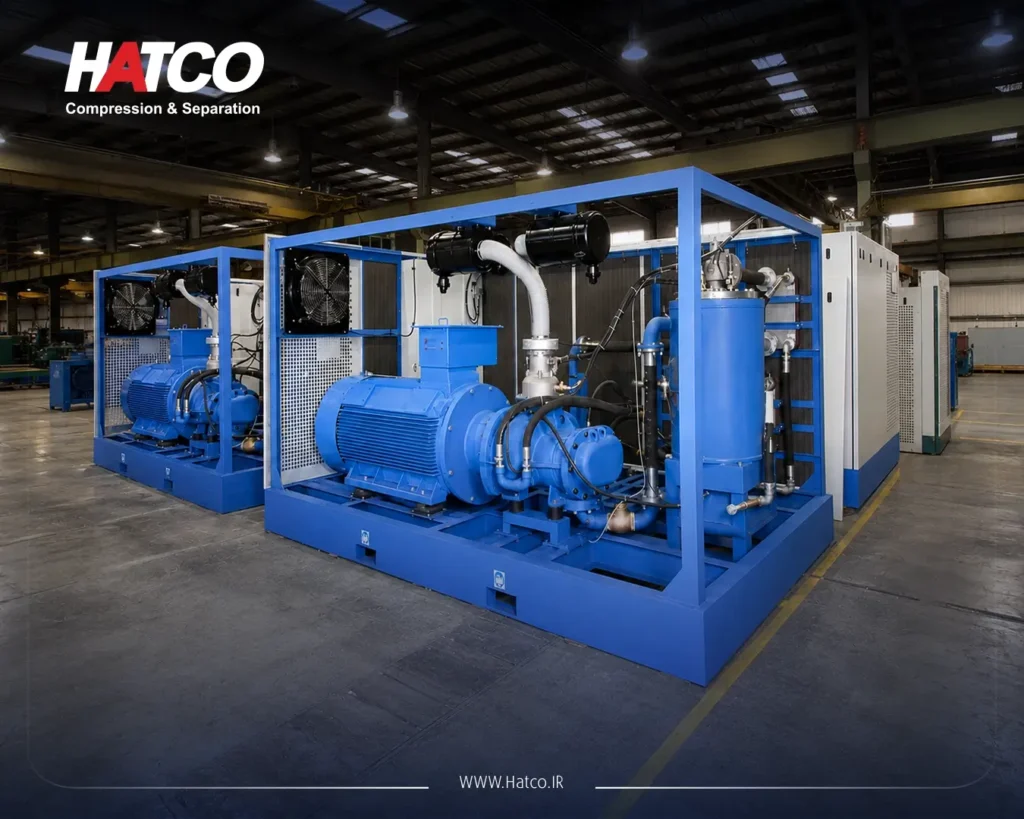
Rotary screw compressors use rotating intermeshing components to compress gas continuously.
Their compact design and smooth flow characteristics make them suitable for a range of industrial applications.
Depending on the process, screw compressors may be oil-injected or oil-free. The correct choice depends on factors such as gas purity, operating pressure, temperature, and downstream requirements.
API 619 code and standard covers rotary-type positive-displacement compressors used in petroleum, chemical, and gas-industry services.
The important point is simple:
There is no single compressor technology that is best for every application.
The right choice is determined by the process and also another major criteria are the OPEX and the CAPEX should be measured in higher level of decision making.
Efficiency: Getting More from Every Unit of Energy
Compression can be energy-intensive.
For that reason, efficiency is one of the most important considerations when designing an industrial gas compression system.
But compressor efficiency should not be considered only at the machine level.
The surrounding system matters too.
A poorly designed suction line can create unnecessary pressure losses. An inefficient cooling system can increase operating temperatures. Excessive discharge pressure can force the compressor to consume more energy than necessary.
Control strategy also has a major effect.
For example, centrifugal compressors may use recycle systems to maintain stable operation at low flow. This is an important safety and reliability function, but excessive recycle means that energy is being used to compress gas that is simply returned to the system and wasted power consuming.
The goal is therefore not just to make the compressor efficient.
It is to make the whole compression system work efficiently.
ISO 1217 provides internationally recognized methods for acceptance testing of displacement compressors, including their flow and power performance.
Cooling: An Essential Part of Compression
Compression generates heat.
That heat needs to be managed to keep the equipment and gas within acceptable operating conditions.
Industrial systems may use intercoolers between compression stages and aftercoolers after the final stage.
Cooling can improve the overall compression process while protecting equipment and preparing the gas for downstream operations. But cooling equipment must also be properly sized. Too little cooling can result in excessive temperatures. Too much restriction through the cooler can create unnecessary pressure loss.
The design therefore needs to balance thermal performance, pressure drop, ambient conditions, gas properties, and operating requirements. In other words, even something as straightforward as “cooling the gas” becomes part of the overall system optimization.
Keeping the Compressor Stable
A compressor needs to remain within a safe and predictable operating range. This is where control systems become essential.
For centrifugal compressors, one of the most important functions is anti-surge control.
Surge can occur when gas flow becomes too low for the pressure conditions imposed on the compressor and machine vibration. The resulting instability can create significant fluctuations and potentially damage equipment.
An anti-surge system monitors the compressor’s operating condition and can increase gas flow through a controlled recycle path when necessary.
The challenge is finding the right balance. The system needs to respond quickly enough to protect the compressor, while avoiding unnecessary recycling that wastes energy. Good compressor control is therefore about more than automation. It is about maintaining a stable operating environment for the machine.
The Role of Piping
A compressor cannot perform properly if the system around it is poorly designed.
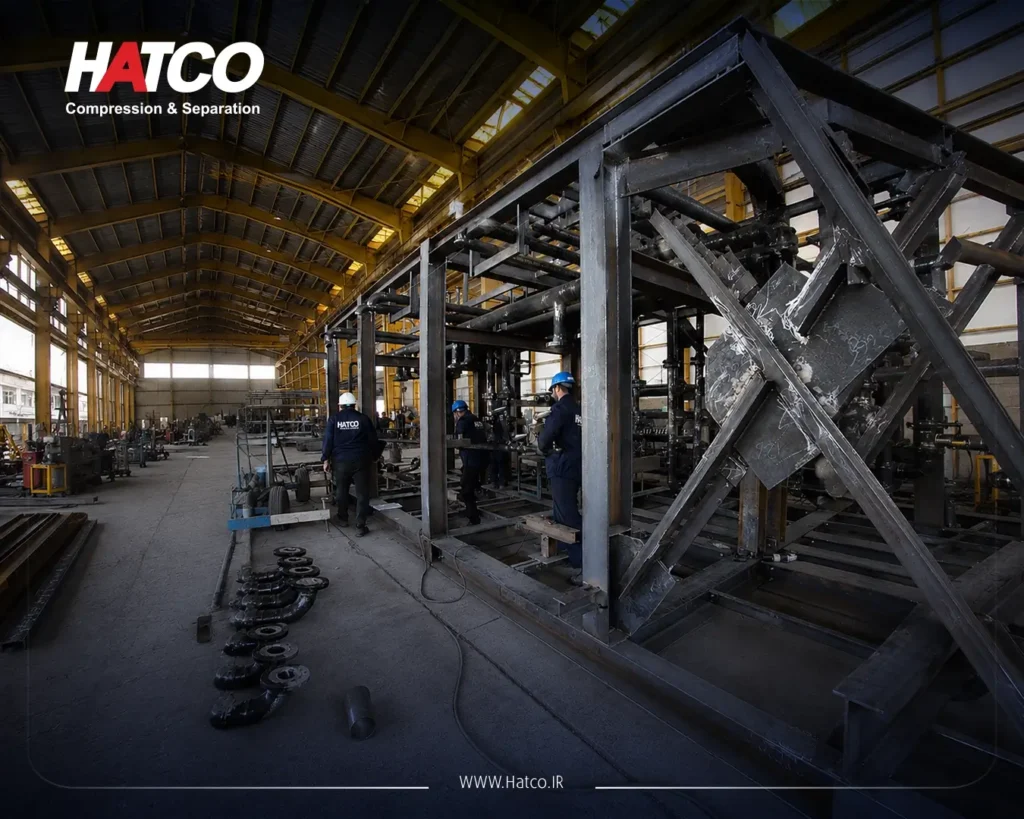
Piping affects how gas enters and leaves the compressor, how much pressure is lost, how thermal expansion is handled, and how mechanical forces are transferred.
For reciprocating compressors, pressure pulsations can also affect connected piping and equipment.
Engineered to order pulsation suppression devices (dampener) for reciprocating compressors before it drives piping vibration, fatigue cracking and instrument error, to the residual limits of API 618.
ASME B31.3 provides requirements for process piping used in industries including petroleum refining, chemical processing, hydrogen facilities, and cryogenic plants.
This highlights an important engineering principle:
The compressor and its piping should be considered as one system.
The same applies to separators, coolers, filters, valves, and other equipment connected to the compressor.
Reliability Starts with Design
When people think about equipment reliability, maintenance is often the first thing that comes to mind.
But reliability begins much earlier. It starts during engineering.
A reliable compression system needs appropriate equipment selection, suitable operating conditions, effective cooling, reliable sealing, proper lubrication, adequate protection, and accessible maintenance arrangements. For critical processes, redundancy may also be considered.
A plant might use multiple compressors operating in parallel or maintain a standby compressor depends on the licensor and basic design of the plant. The best configuration depends on how important the compressor is to the overall process. This is also why equipment should not be evaluated solely by purchase price.
A compressor that costs less initially but consumes more energy or requires more frequent maintenance may ultimately be more expensive over its operating life.
Safety Is Part of Performance
Industrial compressors often operate with high pressures and temperatures and may handle flammable, toxic, or otherwise hazardous gases. Safety therefore has to be built into the system from the beginning.
Depending on the application, compressor packages can incorporate pressure relief devices, emergency shutdown systems, high-temperature protection, vibration monitoring, overspeed protection, gas detection, isolation valves, and other safeguards.
The exact protection philosophy depends on the process and applicable project requirements, but the principle remains consistent:
A high-performance compressor is not truly high-performance if it cannot operate safely.
From Compressor to Complete Package
One of the most important developments in industrial compression is the shift from thinking about the compressor as an individual machine to thinking about the compressor package as an integrated solution.
A complete package may bring together mechanical equipment, process equipment, electrical systems, instrumentation, controls, piping, cooling, lubrication, sealing, and protection.
This integration reduces the risk of treating each component independently. For example, changing the compressor may affect driver requirements.
Changing the gas composition may affect sealing and cooling also effects on the compressor type.
Changing the operating pressure may affect piping and pressure-containing equipment.
Changing the flow range may affect control strategy.
Every major design decision can influence several other parts of the system.
This is why successful compressor projects require coordination between multiple engineering disciplines.
Where Compression Meets the Energy Transition
The role of gas compression is also expanding as industrial processes evolve.
Hydrogen production and purification, carbon capture, flare gas recovery, gas recycling, LNG infrastructure, and lower-carbon industrial processes all depend on effective gas handling.
In these applications, compression can influence both operating costs and environmental performance.
Higher efficiency means lower energy consumption. Better control can reduce unnecessary recycle. Reliable sealing can reduce gas losses.
Condition monitoring can identify performance degradation before it becomes a major failure.
As industrial facilities become more focused on energy efficiency and emissions reduction, compression systems are increasingly becoming part of the broader sustainability conversation.
Digital Monitoring and Smarter Maintenance
Modern compressor packages can continuously collect information about pressure, temperature, vibration, flow, speed, and other operating conditions. The value of this information comes from understanding changes over time.
A gradual increase in vibration may indicate developing mechanical issues.
Increasing energy consumption under similar process conditions may indicate declining performance.
Repeated anti-surge activity may suggest that the compressor is frequently operating close to its stability limit.
This type of information can support condition-based maintenance and help engineers identify potential problems earlier.
The goal of digital monitoring is not simply to collect more data. It is to turn operational data into better engineering decisions.
API 670 provides requirements for machinery protection systems and covers monitoring and protection of critical machinery parameters.
Pressure by Design: The Bigger Picture
A high-performance industrial gas compression system is the result of many engineering decisions working together.
The process determines the required pressure and flow. The gas composition influences compressor selection and material requirements. The pressure range influences the compression architecture.
The compressor determines how energy is transferred to the gas. Cooling manages the resulting heat. Piping controls how gas moves through the system. Instrumentation provides visibility. Control systems maintain stable operation. Protection systems help prevent equipment damage and maintenance strategies determine how reliably the system performs throughout its service life.
This is the real meaning of Pressure by Design.
Pressure is not simply something a compressor produces. It is a design requirement that influences the entire system.
Conclusion
Industrial gas compression may appear simple from the outside: take gas at one pressure and deliver it at another.
Behind that simple function, however, lies a combination of thermodynamics, mechanical engineering, process design, control, safety, and energy management.
The right compressor is not necessarily the largest, most powerful, or most sophisticated machine.
It is the one that fits the process. When compressor technology, operating conditions, cooling, piping, controls, safety systems, and maintenance requirements are designed together, pressure becomes more than a process parameter. It becomes a controlled tool for improving industrial performance. That is the principle behind high-performance compression:
Design the pressure. Integrate the system. Optimize the performance.
HATCO Compression Solutions
At HATCO, compression is approached as an integrated engineering solution, with the compressor selected around the requirements of the process rather than as a standalone piece of equipment.
HATCO’s compression portfolio includes centrifugal, screw, and reciprocating compressor solutions for both process gas and compressed-air applications. This range allows the appropriate technology to be considered based on factors such as gas type, required flow, pressure, operating conditions, and application requirements.
Centrifugal compressors are suited to applications where continuous and relatively high gas flow is required. HATCO provides centrifugal solutions for process gases as well as compressed-air services, including applications across oil and gas, petrochemical, air separation, and other industrial processes.
Screw compressors provide a flexible solution for a wide range of industrial services. HATCO’s process gas screw compressors are particularly suited to applications with lower flow requirements and can also be applied to wet or less-clean gas streams. For compressed air, HATCO offers both oil-injected and oil-free screw compressor solutions depending on the required air quality and application.
Reciprocating compressors are another important option where higher pressure and comparatively lower flow are required. Their positive-displacement operating principle makes them suitable for demanding gas compression duties across process industries.
Beyond the compressor itself, HATCO’s approach includes the integration of supporting systems such as cooling, filtration, separation, piping, control, and other auxiliary equipment. This allows the compression package to be considered as part of the wider process rather than as an isolated machine.
Ultimately, effective compression is about choosing the right technology for the right process—and integrating every part of the system to deliver reliable, efficient, and consistent performance.


User Comments