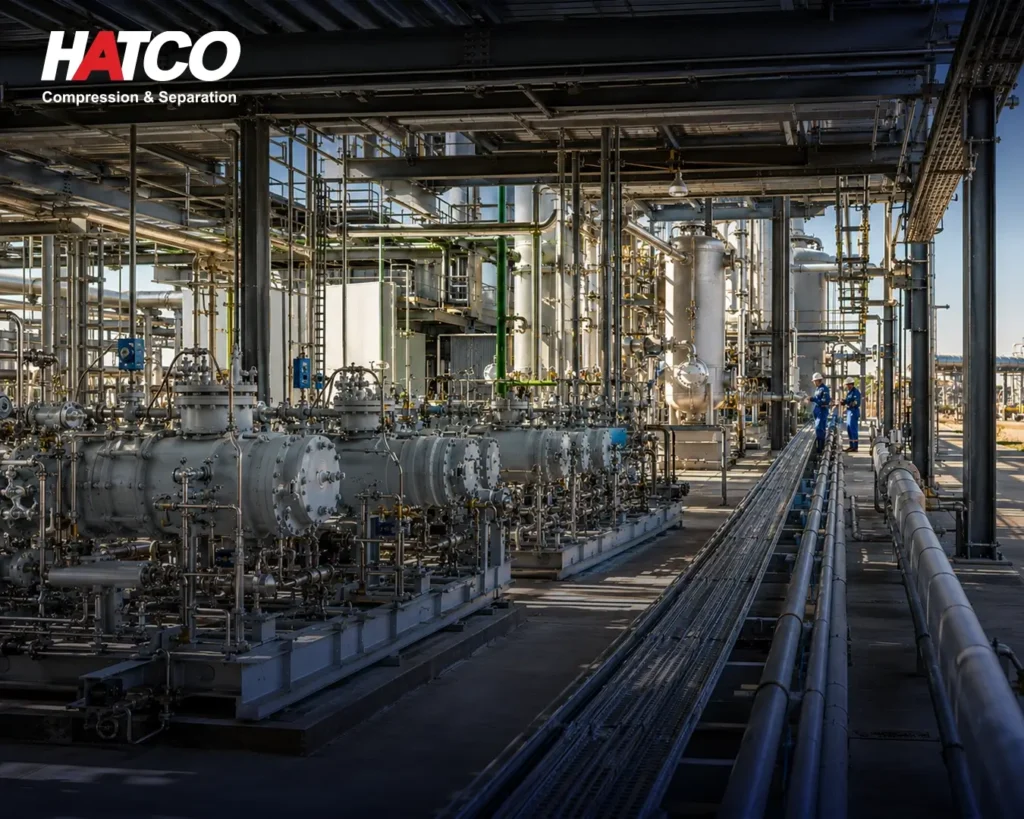
What Does EPC Really Mean in an Industrial Gas Project?
When the term EPC is used in the industrial sector, it is often summarized in three words: Engineering, Procurement, and Construction. However, in a complex industrial gas project, EPC means much more than these three activities.
An EPC project is ultimately about transforming a technical requirement into a fully integrated, safe, reliable, and operational facility. Engineering defines how the plant should work, procurement turns the engineering requirements into equipment and materials, and construction brings the entire design together on site. The final proof of success comes during commissioning and performance testing, when the completed plant must demonstrate that it can operate according to the agreed requirements.
This integrated responsibility becomes particularly important in industrial gas projects such as Air Separation Units (ASUs), PSA nitrogen plants, hydrogen purification systems, process gas compressor packages, and instrument air systems. These facilities consist of multiple interconnected systems, where the performance of one subsystem can directly influence the performance of the entire plant.
EPC Is More Than Three Letters
At first glance, EPC may appear to describe a simple sequence: design the plant, purchase the equipment, and build it.
In reality, these activities continuously interact with one another.
Engineering decisions influence procurement. Procurement schedules affect construction planning. Construction conditions can require engineering modifications, while commissioning may reveal issues that require changes in equipment configuration, control logic, or process settings.
For this reason, a successful EPC contractor must manage the project as one integrated system, rather than treating engineering, procurement, and construction as separate departments.
This is especially important in industrial gas facilities, where process conditions, equipment performance, utilities, instrumentation, and control systems must work together continuously.
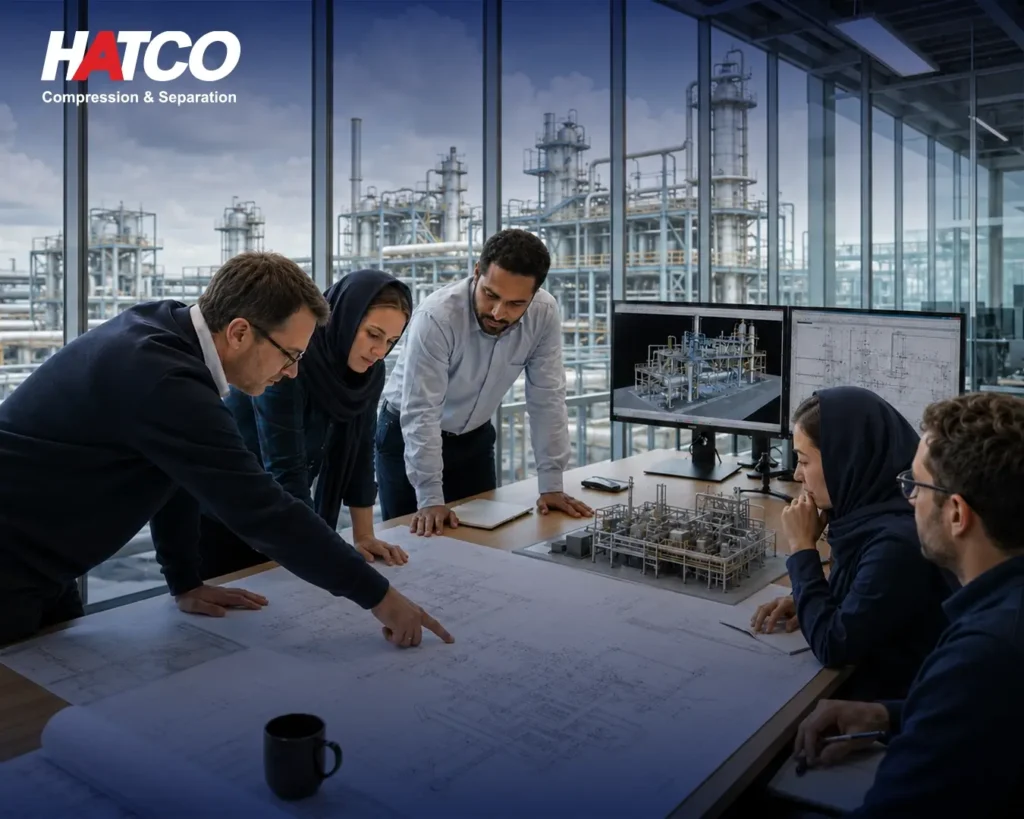
Engineering: Where the Project Really Begins
Engineering is the foundation of an EPC project because every major decision made later depends on the quality of the initial design.
The process usually begins by establishing the project’s design basis. The EPC team needs to understand the required gas capacity, product purity, operating pressure, temperature, utility availability, site conditions, reliability requirements, applicable standards, and safety considerations.
Once these requirements are established, the project moves through basic and detailed engineering.
Basic engineering defines the overall process architecture. Documents such as Process Flow Diagrams (PFDs), heat and material balances, equipment lists, process descriptions, utility requirements, and control philosophies establish how the facility is expected to operate.
Detailed engineering then converts this concept into an executable design. Process, mechanical, piping, electrical, instrumentation, civil, structural, and control engineers work together to produce the drawings, specifications, calculations, datasheets, and technical documents required for procurement and construction.
The important point is that engineering is not simply about producing drawings.
It is about answering a much more important question:
How will all parts of the plant work together as one system?
For example, in a cryogenic ASU, air compression, purification, heat exchange, expansion, refrigeration, and cryogenic distillation are closely connected. A decision made in one part of the process can influence the performance of another.
That is why industrial gas engineering requires both discipline-specific expertise and system-level thinking.
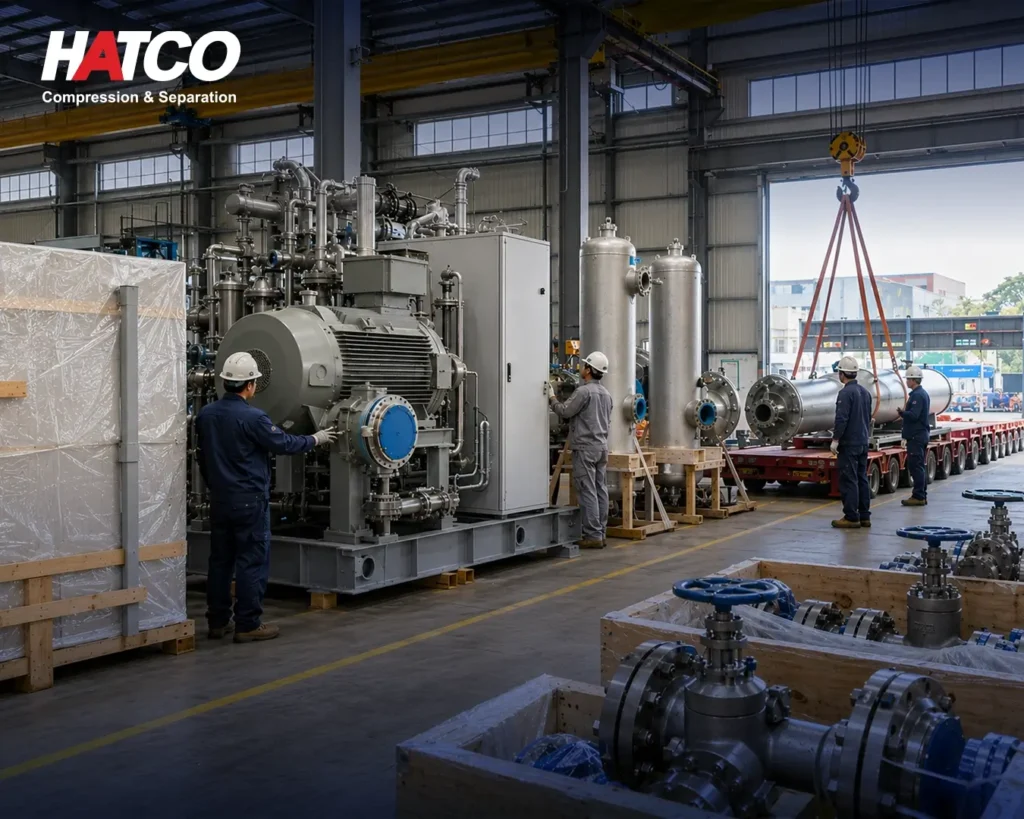
Procurement: More Than Buying Equipment
Procurement is often misunderstood as a commercial activity, but in an EPC project it is deeply connected to engineering.
The EPC contractor must identify suitable vendors, evaluate technical offers, negotiate commercial conditions, monitor manufacturing, coordinate inspections, and ensure that equipment arrives at the site according to the project schedule.
Selecting equipment based only on purchase price can create significant problems later.
A compressor, for example, may meet the basic capacity requirement but have higher energy consumption, longer delivery time, different maintenance requirements, or insufficient compatibility with the plant’s control system.
Therefore, procurement decisions should consider the total technical and lifecycle value of the equipment.
Technical bid evaluation is an important part of this process. Engineers review parameters such as capacity, pressure, efficiency, materials, applicable standards, performance guarantees, utilities, control interfaces, maintenance requirements, and delivery conditions.
For critical equipment, inspection and testing during manufacturing are equally important. Identifying a quality or performance issue before equipment reaches the site is considerably easier—and usually less expensive—than discovering it during installation or commissioning.
Construction: Turning Design into a Working Facility
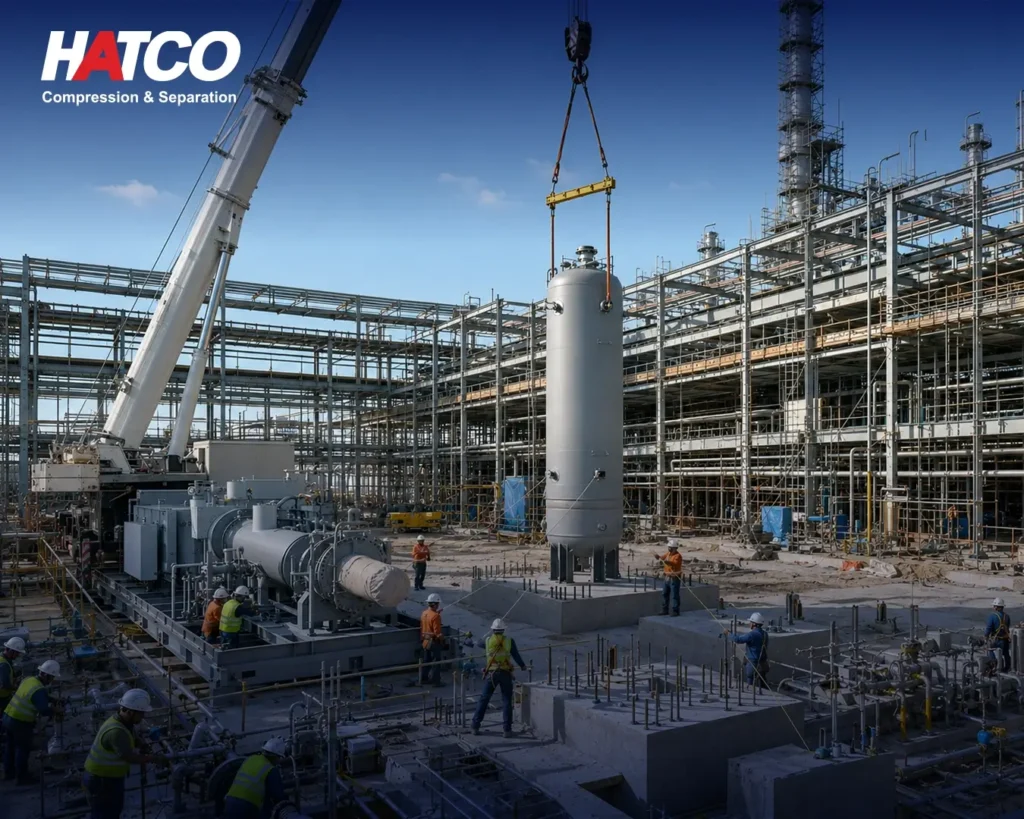
Construction is the stage where engineering documents, equipment, and materials become a physical plant.
However, construction in an industrial gas project involves much more than equipment installation.
Civil works, foundations, structural steel, mechanical equipment, piping, electrical systems, instrumentation, insulation, painting, and utilities must all be installed according to the engineering design and in the correct sequence.
Coordination is critical.
For example, equipment foundations must be completed before equipment installation. Piping connections must match equipment interfaces. Electrical and instrumentation systems must be installed and tested before systems can be safely energized.
Poor coordination at this stage can result in rework, delays, additional costs, and ultimately commissioning problems.
A competent EPC contractor therefore manages construction not simply as a physical activity, but as the controlled implementation of the engineered system.
The Most Important EPC Challenge: System Integration
One of the biggest differences between equipment supply and EPC execution is system integration.
Imagine a compressor that perfectly meets its mechanical specifications. The compressor itself may be technically successful, but the overall project can still fail to meet its objectives if the electrical system cannot provide the required power, the piping arrangement causes excessive pressure losses, the control system does not communicate correctly with the package, or the process conditions differ from the original design basis.
This demonstrates a fundamental principle of EPC:
A technically successful component does not necessarily create a technically successful plant.
The real challenge is making all components operate correctly together.
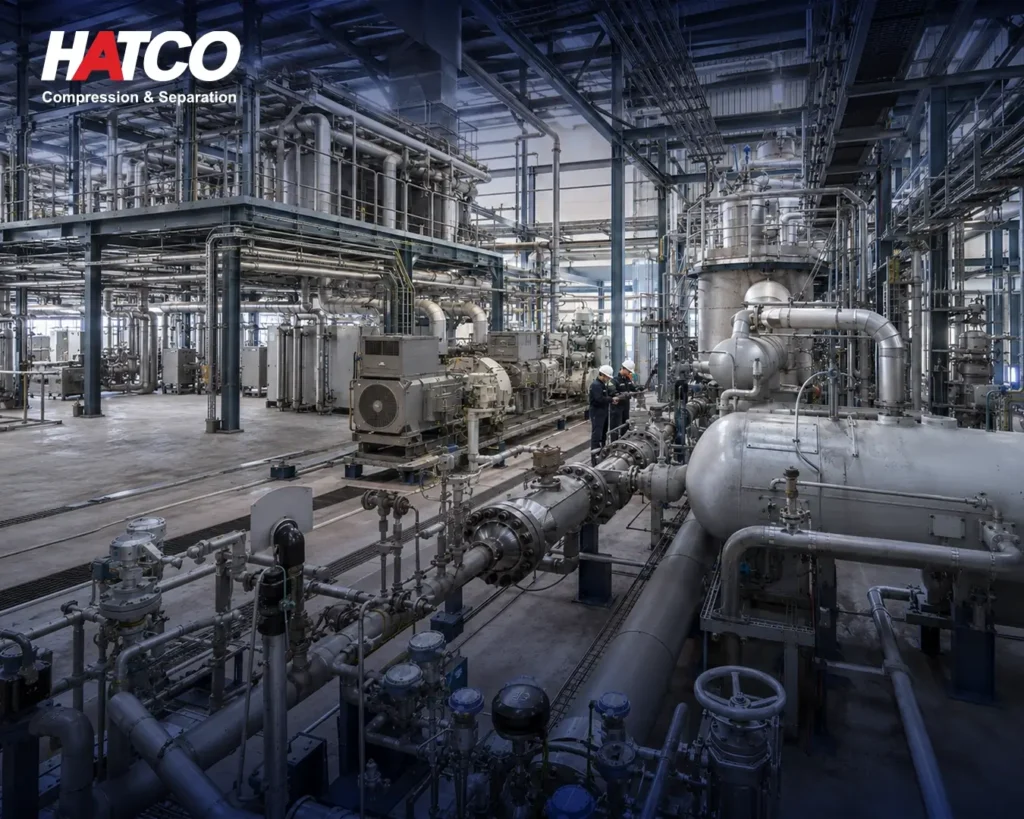
This is particularly important in industrial gas projects, where compressors, dryers, purification systems, cold boxes, storage systems, piping, instrumentation, electrical systems, and control platforms may all interact continuously.
Commissioning: From Construction to Operation
Completing construction does not mean that an EPC project is finished.
The plant must still be prepared for safe operation, tested, started, and demonstrated against its performance requirements.
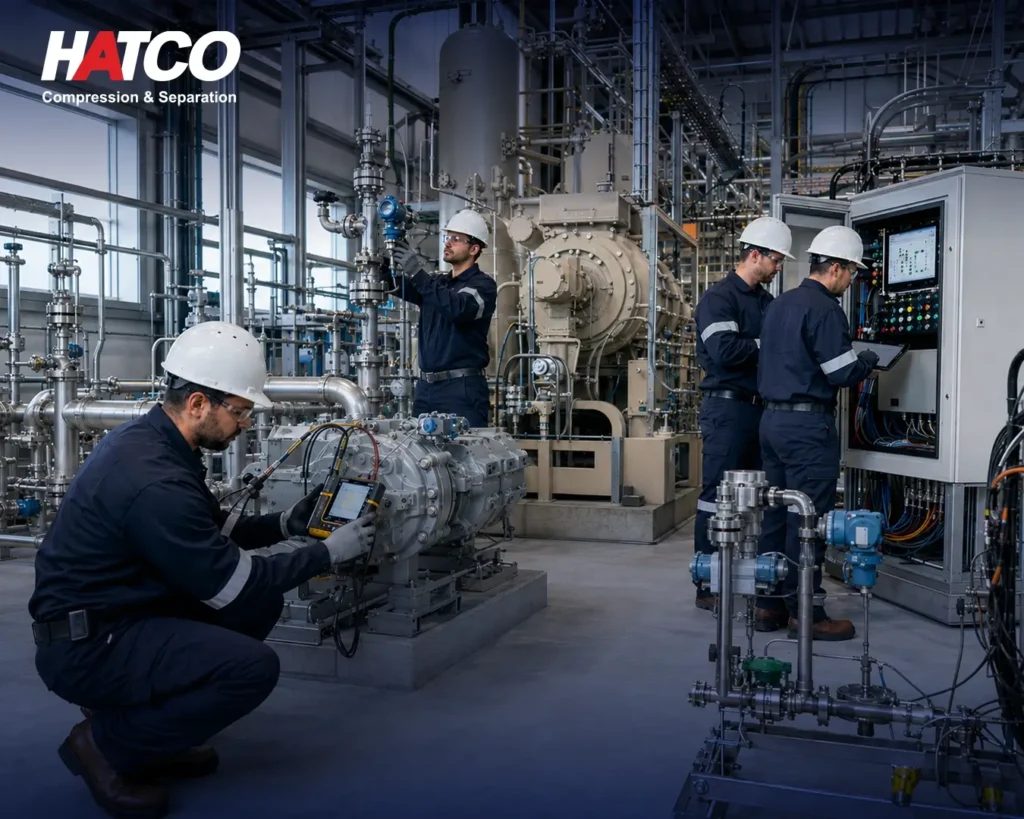
Pre-commissioning may include cleaning, flushing, pressure testing, electrical inspections, instrument calibration, loop checks, and equipment verification.
Commissioning then progressively brings individual systems into operation and verifies their interaction. This is followed by start-up, process introduction, optimization, and performance testing.
The commissioning stage is particularly important because it is where the project moves from “installed equipment” to “operating facility.”
Performance testing may evaluate parameters such as production capacity, product purity, pressure, energy consumption, reliability, and other contractual requirements.
For an industrial gas plant, producing gas is not necessarily enough.
The plant must produce the right quantity and quality, at the required conditions, with the expected level of efficiency and reliability.
Safety Must Be Part of the EPC Design
Safety cannot be added at the end of an industrial gas project.It needs to be considered from the earliest engineering stages.
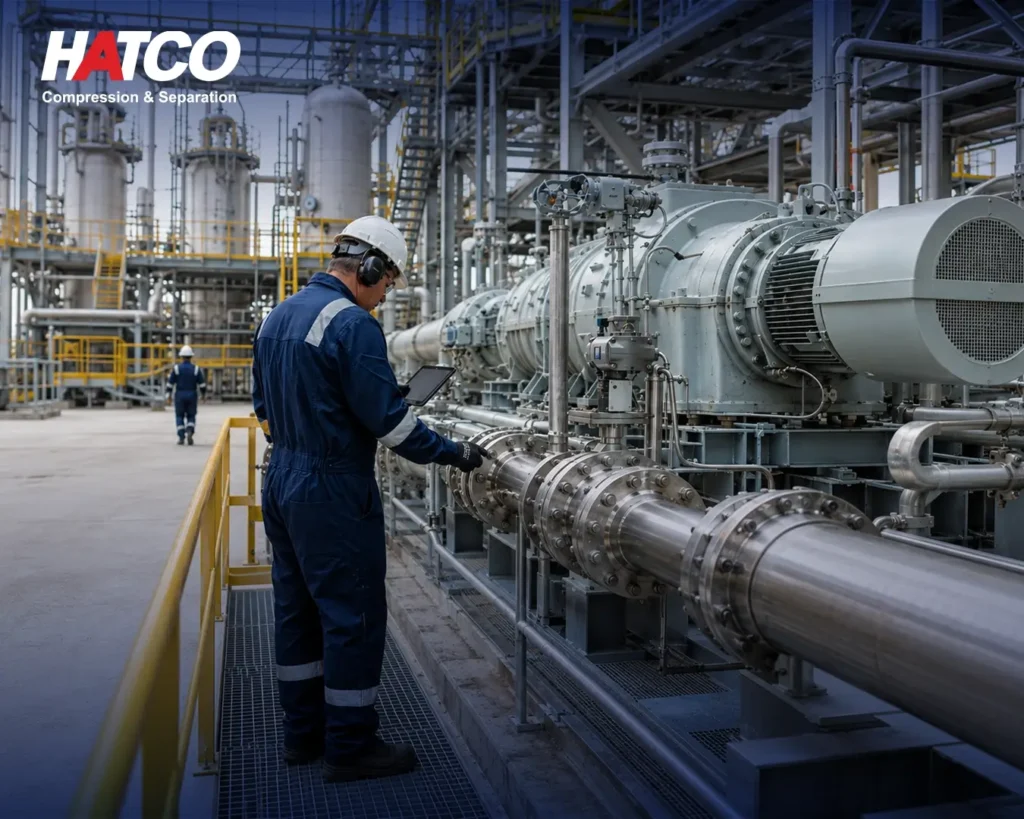
Industrial gas facilities may involve high-pressure systems, cryogenic temperatures, rotating machinery, electrical hazards, oxygen-enriched environments, and—in certain applications—flammable gases.
Consequently, safety considerations influence equipment selection, plant layout, instrumentation, control philosophy, emergency shutdown systems, pressure protection, access, maintenance, and operating procedures.
A strong EPC approach integrates safety into engineering and project execution rather than treating it as a final inspection requirement.
Managing Risk Across the EPC Lifecycle
Every industrial EPC project involves technical, commercial, schedule, and operational risks.
Some of the most significant risks originate from an incomplete design basis, long-lead equipment, late engineering changes, poor interface management, procurement delays, and insufficient commissioning planning.
The key is not simply to identify these risks, but to manage them early.
For example, if a critical compressor has a long manufacturing lead time, procurement planning should begin while engineering is sufficiently mature. If several systems depend on a common control philosophy, their interfaces should be reviewed before installation.
Effective EPC execution is therefore largely about anticipating problems before they become expensive problems.
EPC vs. Equipment Supply
The difference between EPC and equipment supply can be summarized through one concept: responsibility for integration.
An equipment supplier may deliver a compressor, dryer, cryogenic tank, valve, or other component according to a defined specification.
An EPC contractor must determine how that equipment fits into the complete facility.
This includes its process connections, utilities, electrical requirements, instrumentation, control interfaces, foundations, piping, safety requirements, maintenance access, testing, and commissioning.
In other words, equipment supply delivers a component.
EPC delivers an integrated operating system.
What Does EPC Really Mean?
So, what does EPC really mean in an industrial gas project?
It means taking responsibility for connecting a project’s technical requirements with its final operational reality.
Engineering defines what the plant should be and how it should operate.
Procurement ensures that the required equipment and materials are selected, manufactured, inspected, and delivered.
Construction transforms the engineered design into a physical facility.
Commissioning and performance testing demonstrate whether the completed system actually works as intended.
The value of EPC therefore lies not in the three letters themselves, but in the integration between them.
HATCO: Engineering an Integrated Industrial Gas Solution
At HATCO, EPC is approached as an integrated engineering and industrial capability focused on delivering complete solutions for industrial gas and compression applications.
HATCO’s capabilities cover areas including engineering and design, procurement, manufacturing, inspection, erection, commissioning, and technical training. Its engineering activities span process, mechanical, piping, civil and structural, electrical, instrumentation and control, and QHSE disciplines.
The company’s portfolio includes Cryogenic Air Separation Units, PSA/VPSA nitrogen systems, hydrogen PSA plants, process gas compression systems, instrument air packages, cold boxes, cryogenic tanks, vaporizers, air dryers, and compressor packages.
This integrated capability allows the project to be viewed as a complete process rather than a collection of individual equipment packages.
For HATCO, the objective of EPC is ultimately clear: to deliver an industrial facility that performs reliably after construction is complete—not simply a facility that has been constructed.

User Comments